ARTIFICIAL INTELLIGENCE IN LOGISTIC
It is impossible to imagine a modern industry without Artificial Intelligence. In a sector where competence is a top priority, digital processes are opening up new opportunities. Artificial intelligence (AI) and Big Data make it possible to automate production processes.
Role Of Artificial Intelligence In Logistics:
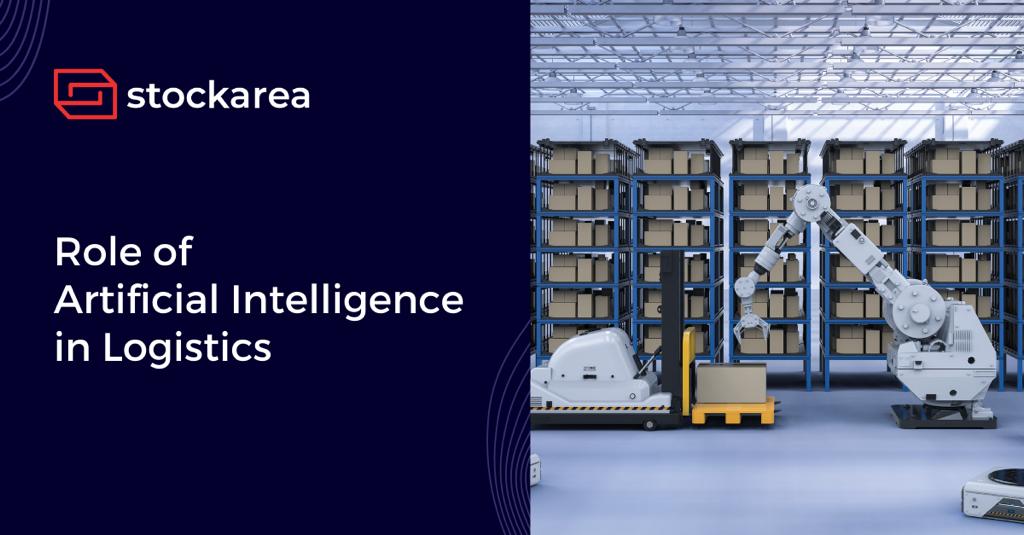
Artificial Intelligence is one of the most revolutionary technologies in the modern world. It benefits businesses worldwide by increasing competence and maximizing resource utilization. AI has also made its way into logistics, where it can provide a varieties of benefits to businesses prepared to embrace developing technology. Artificial intelligence in the logistics industry is a rapidly growing field that has the potential to alter how companies operate fundamentally. Industry leaders are developing cutting-edge solutions for driveless vehicles and other deviation technologies. These advancements provide numerous benefits, including higher efficiency in management duties such as order fulfillment, increased inventory accuracy, shorter delivery times, and more precise forecasting models.
How Artificial Intelligence is disrupting logistics:
1. Accurate Inventory Management
AI-driven technologies can be extremely useful in inventory management. Accurate inventory management can help to ensure that products enter and exit in the proper sequence. There are numerous inventory-related variables, such as order processing, picking, and packing, which can become extremely time-consuming. Effective inventory management can assist avoid overstocking, insufficient stock, and unexpected stock-outs.
2. Increase Warehouse Efficiency
Artificial intelligence is altering warehouse procedures such as fulfilment process, data collection and analysis, as well as inventory management, enabling businesses to increase efficiency and income. AI is used in warehousing to forecast demand, adjust orders, and relocate shipments in transit. You can convert your order placements in response to these forecasts and have in-demand commodities delivered to nearby warehouses as needed. If the chain contains numerous warehouses, AI can connect them to determine the most efficient method of moving the inventory. When demand for specific products is predicted and logistics are planned well in advance, you can offer better customer service and reduce warehousing costs.
3. On-Time Delivery
AI systems can reduce credit on manual work, thereby speeding up, securing, and smartening up the entire process. This enables on-time delivery to the customer in accordance with the agreement. Smart roadways are one application of artificial intelligence which enables on-time delivery in the logistics business. Smart roads contribute to increased road safety and reduce logistical issues and delays caused by inclement weather, resulting in faster deliveries. Roads equipped with sensors can detect traffic volumes and trends, as well as alert vehicles to impending traffic clogging
.
Varsha Tiwari
Student.
Comments
Post a Comment